Check these 5 Secrets About Ryan Martin’s New Pro Mod Career Nobody Told You!

When Ryan Martin started leaning into Pro Mod competition, a lot of fans assumed it was just the next natural step after dominating Street Outlaws and no-prep racing. But the move into Pro Mod isn’t just a class change. It represents a major strategic shift in how he approaches competition, visibility, and long-term legacy.
Here are five things most people aren’t talking about.
First, Pro Mod exposes weaknesses that no-prep can hide. In no-prep racing, surface variability levels the field. In Pro Mod, especially at high-level sanctioned events, the surface is strong and consistent. That means the difference between winning and losing often comes down to pure performance and execution. There’s less room for hustle and more demand for technical perfection. Moving into Pro Mod means Martin is betting on his program being competitive under microscope-level scrutiny.
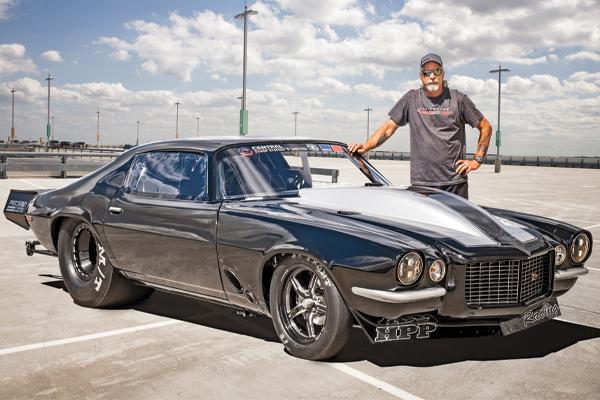
Second, the tuning philosophy changes dramatically. Pro Mod combinations, especially twin-turbo setups, operate at a different level of refinement. Boost curves, shock travel, clutch management (if applicable), and aero balance must all align precisely. The margin for error is tiny. A small miscalculation can mean tire shake, wheel speed, or total loss of a round. Transitioning into Pro Mod requires not just horsepower, but elite-level data interpretation and mechanical discipline.
Third, the financial commitment is far greater than most fans realize. Pro Mod programs demand serious investment. From billet engine components to carbon fiber bodywork, from fresh turbo systems to constant maintenance, the cost per event can escalate quickly. Running competitively isn’t about showing up—it’s about sustaining the budget required to stay at the front. Martin’s entry into Pro Mod signals long-term confidence in his infrastructure, not just his driving.
Fourth, Pro Mod reshapes reputation. On Street Outlaws, Ryan Martin built his brand as a dominant force, often entering events as the favorite. In Pro Mod, he’s competing against seasoned veterans who have been refining their setups for years. Wins mean more, but losses are also more visible. The move shows willingness to test himself in an environment where prior fame doesn’t guarantee results.
Fifth, this shift isn’t just about racing—it’s about evolution. Pro Mod competition broadens exposure beyond the Street Outlaws ecosystem. It positions Martin within a different segment of drag racing culture, potentially aligning him with larger sanctioned events and expanded sponsorship opportunities. It’s less about abandoning one scene and more about expanding into another.
Ryan Martin’s Pro Mod move isn’t flashy drama. It’s calculated progression. It reflects a racer who understands that dominance in one arena doesn’t automatically translate to another—and who is willing to accept that challenge anyway.
The real secret isn’t that he switched classes.
It’s that he chose a class where nothing is guaranteed.