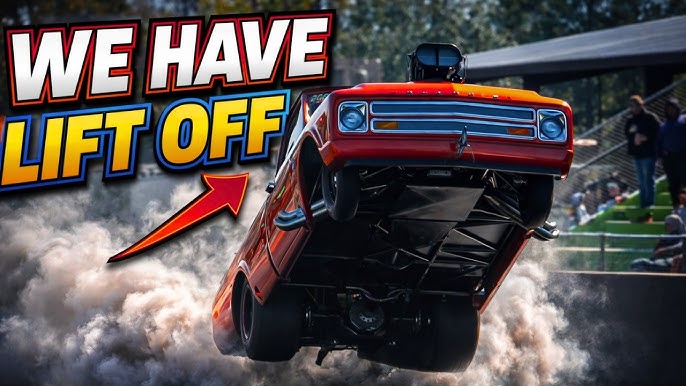
Take a look at this, Big Controversy: NHRA’s ‘Factory Steel’ Rule Will Destroy the Street Outlaws Monsters!

A major controversy has been growing in the drag racing world around the NHRA Factory Steel rule, and many racers believe this rule could completely change how Street Outlaws style cars compete in professional drag racing classes. The discussion is not just about rules. It is about the future of Pro Mod style door cars, tube chassis builds, and the Street Outlaws machines that have dominated no prep and small tire racing for years.
The NHRA Factory Steel rule is centered around one main concept. Cars must retain factory steel body panels and maintain a closer connection to the original production vehicle. This sounds simple, but in high level drag racing, this rule changes everything about how cars are built.
Most Street Outlaws cars are heavily modified. Many of them use full tube chassis setups with lightweight carbon fiber or fiberglass bodies designed purely for performance. These cars may look like Camaros, Mustangs, or Novas, but underneath they are full race cars built for maximum speed and minimum weight.
The Factory Steel rule moves in the opposite direction. By requiring steel body panels and more production based structure, the rule increases vehicle weight and limits how extreme the chassis can be. That means less weight reduction, different weight distribution, and major changes to suspension and power application setups.
For Street Outlaws style builds, this could be a huge disadvantage. Many of the fastest no prep and small tire cars rely on lightweight bodies and highly adjustable tube chassis setups to control traction and power. Adding weight and restricting chassis design could reduce their performance advantage compared to cars specifically built for Factory Steel style classes.
Another major issue is cost. Building a competitive Factory Steel car is not as simple as adding steel panels to an existing race car. Teams may need completely new chassis, new suspension geometry, and new setups to make the heavier cars perform properly. That means racers who want to compete in NHRA Factory Steel classes may need to build entirely new cars instead of modifying existing Street Outlaws builds.
Supporters of the rule argue that Factory Steel keeps drag racing connected to real production cars and prevents the sport from becoming dominated by ultra lightweight carbon fiber bodies that no longer resemble street cars. They believe the rule makes racing more relatable to fans and keeps the sport closer to its original roots.
Critics argue that drag racing has always been about innovation and pushing technology forward. Limiting materials and chassis design, according to them, slows down progress and penalizes teams that have invested heavily in advanced race car builds.
The controversy really comes down to philosophy. One side wants drag racing to stay connected to factory based vehicles. The other side wants fewer restrictions so technology and performance can continue to advance as fast as possible.
For Street Outlaws racers who are moving more into professional drag racing events, rules like Factory Steel could determine whether their current cars remain competitive or become obsolete in certain classes.
This is why the debate is so intense. It is not just about one rule. It is about the direction drag racing is heading and whether future competition will favor factory based builds or full race car designs.
One thing is certain. Rules shape racing. And when rules change, the fastest cars often change with them.