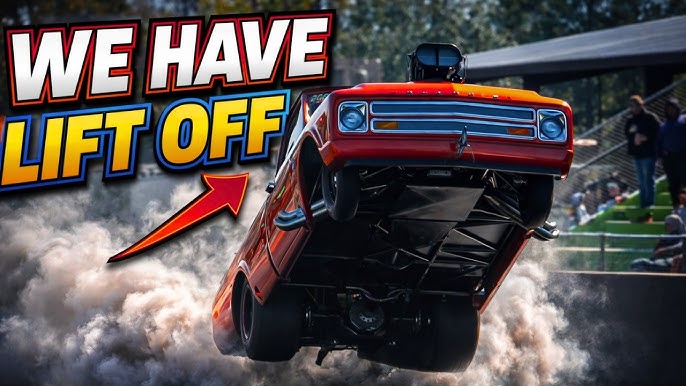
Take a look at this, Mustang Hard Crash Drag Racing Action!
Drag racing delivers speed, sound, and spectacle—but sometimes it delivers harsh reminders of how thin the margin is between a clean pass and a hard crash. A Mustang hard crash at the drag strip is one of those moments that stops everyone in their tracks, not because of drama, but because of physics catching up fast.
This is drag racing action at its most unforgiving.
How a Clean Pass Becomes a Crash in Seconds
Modern Mustangs make serious power. When something goes wrong at speed, it happens instantly.
Common triggers behind hard impacts include:
-
Sudden traction loss during gear changes
-
Tire shake escalating into instability
-
Mechanical failure under load
-
Overcorrection when the car starts moving around
At triple-digit speeds, there’s no time to “save it” once the car passes a certain point.
Why Mustangs Are Especially Demanding at Speed
High-powered Mustangs—especially late-model and heavily modified builds—can be deceptively quick. Their short reaction windows demand discipline.
Key challenges:
-
Aggressive power delivery
-
Sensitive rear suspension geometry
-
Aerodynamic changes as speed builds
-
Narrow error margins on marginal tracks
When everything works, they’re deadly fast. When it doesn’t, consequences arrive hard.
The Role of the Track and Conditions
Not every crash is driver error. Track variables play a huge role:
-
Temperature swings
-
Rubber inconsistency
-
Crosswinds at higher speeds
-
Uneven traction near the wall
A setup that worked earlier in the day can become unstable as conditions change.
Safety Systems That Make Survival Possible
The reason modern drag racers walk away from crashes that once would’ve been catastrophic is simple: safety evolution.
Critical protections include:
-
Certified roll cages and chassis
-
Head-and-neck restraint systems
-
Multi-layer fire suits
-
Modern barrier technology
-
Rapid-response safety crews
These systems don’t prevent crashes—but they save lives when crashes happen.
Why Drivers Lift—or Don’t
One of the hardest decisions in drag racing is knowing when to lift. Staying in it half a second too long often separates a close call from a wreck.
Veteran drivers:
-
Lift early when the car goes neutral
-
Accept losing a run to save the car
-
Prioritize control over pride
Hard crashes usually happen when commitment outpaces conditions.
What Fans Should Take Away
Crashes aren’t entertainment—they’re reminders. Behind every hard hit is:
-
A driver trusting the car
-
A crew that built it
-
A safety system doing its job
Respect for the sport means respecting the risk.
Lessons Teams Learn the Hard Way
After a hard crash, teams typically reassess:
-
Power curves and boost ramps
-
Suspension and shock settings
-
Tire choice and pressure
-
Driver decision points
Progress in drag racing is often written in mistakes that didn’t end worse.
The Reality of High-Speed Drag Racing
Drag racing looks simple—straight line, full throttle—but it’s one of the most demanding motorsports disciplines when things go wrong. At speed, distance disappears and options evaporate.
That’s why preparation and restraint matter as much as horsepower.
Final Thoughts: Speed Demands Respect
A Mustang hard crash is never something to celebrate. It’s a reminder that drag racing rewards precision—and punishes complacency.
Cars can be rebuilt.
Data can be analyzed.
Drivers must always come first.
That respect for consequence is what keeps drag racing moving forward.