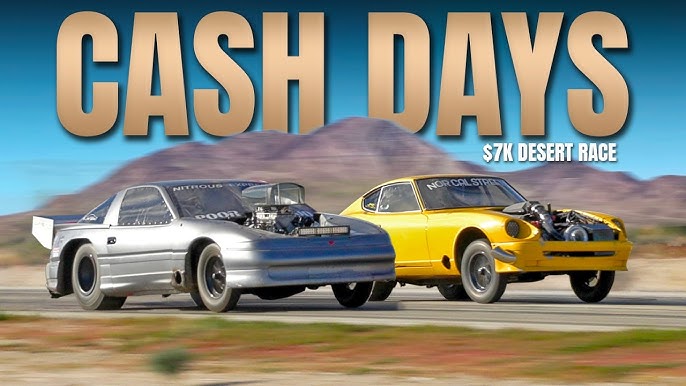
Take a look at this Racing in 30° Weather — Cold-Blooded No Prep Gets INSANE!

No-prep racing is already one of the most unforgiving forms of drag racing. Now drop the temperature to 30 degrees, and the game changes completely. Cold air, cold pavement, and massive horsepower create a scenario where every decision is magnified and every mistake is punished instantly.
This is cold-blooded no-prep racing—and when it gets insane, it gets dangerous fast.
Why 30° Weather Is a Nightmare for No Prep
Cold weather might sound great for horsepower, but for no-prep racing, it’s a double-edged sword.
At 30°:
-
Asphalt loses grip dramatically
-
Tires struggle to generate heat
-
Suspension reacts slower
-
Cars become unpredictable in high gear
You gain power—but lose forgiveness.
Cold Air = More Power, Less Control
Cold, dense air packs more oxygen. Engines love it. Racers? Not always.
In these conditions:
-
Boost comes in harder
-
Nitrous hits feel more violent
-
Torque spikes faster than the surface can handle
Cars that are manageable in summer suddenly become animals in the cold.
The Tire Problem Nobody Escapes
Tires are the biggest challenge in freezing no-prep conditions.
Problems racers face:
-
Burnouts don’t build enough heat
-
Tires cool immediately at the line
-
Small changes cause big reactions
Even the best tire can’t overcome physics. Control becomes more important than compound.
Launches Separate Veterans from Everyone Else
At 30°, launching hard is a losing strategy.
The racers who survive:
-
Soften the hit
-
Delay power application
-
Accept slower 60-foot times
Those chasing numbers usually end up chasing the wall.
High-Gear Madness: Where It Gets Real
Most cold-weather no-prep incidents don’t happen at the hit—they happen downtrack.
Why:
-
Tires finally hook, then break loose again
-
Boost ramps too aggressively
-
Drivers stay in it half a second too long
That’s when cars move fast—and violently.
Mental Discipline Wins in the Cold
Cold no-prep racing is as much psychological as mechanical.
The best drivers:
-
Lift early instead of saving it late
-
Trust instincts over ego
-
Choose survival over social-media glory
In freezing conditions, restraint wins money—and keeps cars intact.
Why Fans Love Cold-Weather No Prep
Despite the risk, fans are drawn to cold no-prep racing because it’s raw and honest.
There’s no hiding:
-
No perfect surface
-
No ideal tune-ups
-
No second chances
What happens is real—and final.
Cold-Blooded Racing Exposes Weak Builds
Freezing conditions quickly reveal:
-
Poor suspension geometry
-
Aggressive power curves
-
Marginal tire choices
Cars that “work everywhere” earn respect when the temperature drops.
Why 30° No Prep Is Respected, Not Chased
Most racers avoid these conditions for a reason. Racing in 30° weather isn’t about bragging—it’s about proving discipline.
Only racers confident in:
-
Their setup
-
Their judgment
-
Their ability to lift
…should even consider lining up.
Final Thoughts: Insane for a Reason
Racing in 30° weather turns no-prep into something else entirely. Faster engines, worse traction, and zero margin for error create a perfect storm where bravery meets reality.
Cold-blooded no-prep racing doesn’t reward recklessness.
It rewards control, experience, and respect for conditions.
That’s why when it gets insane—it gets unforgettable.