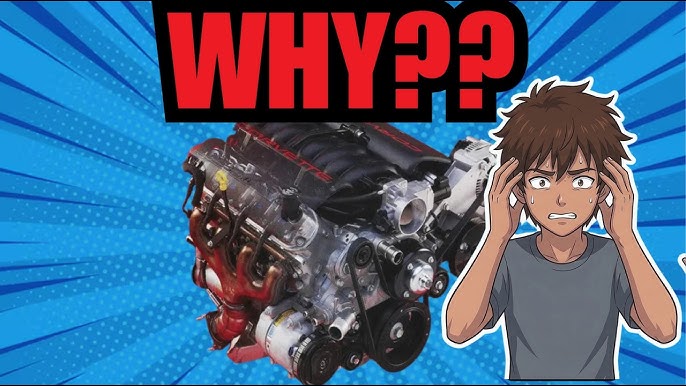
Take a look at this, Shawn Murder Nova DITCHES Turbos for a PROCHARGER on “Blue”!

Shawn “Murder Nova” Ellington just made one of the boldest mechanical moves of his recent racing career. The longtime turbo advocate has officially ditched twin turbos in favor of a ProCharger centrifugal supercharger on “Blue,” and that decision says a lot about where his program is headed.
For years, turbo setups have dominated high-horsepower street and no-prep racing. They offer massive top-end power, flexible boost control, and the ability to scale horsepower to extreme levels. On paper, abandoning turbos can look like a step backward. But in reality, this move is less about peak numbers and more about control, consistency, and application.
A ProCharger fundamentally changes how power is delivered. Unlike turbos that rely on exhaust energy and boost ramp strategies, a centrifugal supercharger is belt-driven. That means boost builds in a more linear, RPM-dependent fashion. For a car like Blue, which has struggled at times with managing violent power hits on marginal surfaces, this could be a strategic upgrade rather than a downgrade.
With turbos, especially large twin setups, spool characteristics and boost ramps can create aggressive torque spikes. That works on great prep, but on questionable no-prep surfaces, it can turn into tire shake, wheel speed, and lost races in the first 60 feet. A ProCharger setup offers smoother power delivery, which can translate into better early traction and fewer surprise surges mid-track.
There’s also the packaging and simplicity factor. Turbo systems require extensive hot-side plumbing, wastegate management, and heat control. A ProCharger system simplifies routing and reduces some of the complexity under the hood. Fewer components can mean improved reliability and easier trackside adjustments. In high-pressure race environments, that matters.
The switch also signals a philosophical shift. Shawn “Murder Nova” Ellington has always been deeply hands-on with his builds, preferring to understand and control every element of his program. A centrifugal supercharger setup offers more predictable tuning characteristics. Instead of relying heavily on boost-by-gear strategies and complex ramp curves, the focus shifts toward pulley ratios, fuel mapping, and chassis setup.
This doesn’t mean Blue is getting softer. Properly set up, a ProCharged combination can still produce four-digit horsepower with strong mid-range pull and clean top-end charge. The difference is how that power is delivered to the tire. In small-tire and street-style racing, controllable horsepower often beats explosive horsepower.
The big question now is how Blue will respond on the surface. If the new ProCharger combination hooks harder and stays straighter, it could dramatically improve round-by-round consistency. If it maintains competitive trap speeds while improving early stability, this move could pay off immediately.
Switching power adders at this level is never casual. It requires rethinking the tune, suspension balance, and race strategy. But that’s what makes this development so intriguing. It shows a willingness to evolve rather than stubbornly stick to what worked in the past.
Shawn Murder Nova ditching turbos for a ProCharger on Blue isn’t just a hardware swap. It’s a calculated attempt to refine how the car applies power. In modern street and no-prep racing, the difference between winning and spinning often comes down to that exact decision.