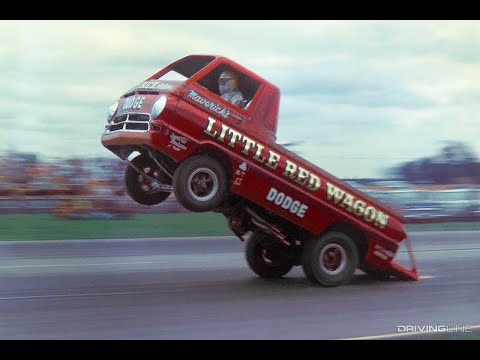
Take a look at this and STOP Bringing THESE LS Blocks to the Drag Strip – Costly Mistakes Racers Keep Making!

In the world of drag racing, few engine platforms are as popular—or as misunderstood—as the LS. Lightweight, affordable, and capable of serious horsepower, LS engines have become the go-to choice for racers at every level. But there’s a hard truth many are learning the expensive way: not all LS blocks belong anywhere near a drag strip.
Too many builds fail not because of tuning or driving—but because the wrong block was chosen from the start.
The Problem with “Budget” LS Blocks
The biggest mistake racers make is assuming every LS engine can handle big power. While junkyard LS builds are legendary, there’s a limit—and many cross it.
Stock cast-aluminum blocks like the LS1, LS2, and LS3 were never designed for extreme drag racing abuse. They work great in street cars or mild setups, but once you push into serious horsepower—especially with boost or nitrous—they quickly become a liability.
The issue isn’t just strength. It’s structural integrity under repeated stress.
Why These LS Blocks Fail Under Pressure
At high horsepower levels, especially above 800–1000 HP, these blocks begin to show their weaknesses:
- Thin cylinder walls start to distort or crack
- Main caps walk under heavy load
- Block flex leads to catastrophic internal failure
- Aluminum construction struggles with repeated shock loads from hard launches
On the street, you might get away with it. On the drag strip—where every launch is violent and unforgiving—failure is only a matter of time.
The Real Danger: It’s Not Just the Engine
When an LS block fails at full power, it’s not just a rebuild—you’re risking the entire car.
A catastrophic failure can:
- Destroy rotating assembly components
- Damage turbos, headers, and accessories
- Cause oil downs that are dangerous for other racers
- End your race weekend instantly
This is why experienced racers don’t gamble with weak foundations.
Blocks You Should Think Twice About
If you’re building a serious drag car, these are the blocks that often cause problems when pushed too far:
- LS1 / LS2 aluminum blocks – Lightweight but weak for high boost
- LS3 blocks – Better, but still limited under extreme power
- Truck aluminum variants – Not built for racing stress
They’re fine for:
✔ Street builds
✔ Mild strip passes
✔ NA or low boost setups
But once you start chasing real numbers—they become the weak link.
What Serious Racers Use Instead
If your goal is consistent performance and reliability, stepping up your foundation is non-negotiable.
The safer options include:
- Iron truck blocks (5.3 / 6.0) – Heavier but significantly stronger
- Aftermarket LS blocks – Built for extreme horsepower
- Sleeved aluminum blocks – Reinforced for high boost applications
These setups are designed to handle repeated abuse—exactly what drag racing demands.
The Truth Most Don’t Want to Hear
A cheap LS build might look like a smart move at first. But when you factor in failures, rebuilds, and lost track time, it often becomes far more expensive than doing it right the first time.
In drag racing, the foundation matters more than anything else.
You can have the best turbo setup, the perfect tune, and top-tier suspension—but if your block can’t handle the power, none of it matters.
Final Verdict
LS engines are incredible—but they’re not indestructible. The drag strip exposes every weakness, and the wrong block choice will eventually catch up with you.
If you’re serious about racing, stop thinking short-term.
Build smart, build strong—and most importantly…
Stop bringing the wrong LS blocks to the drag strip.