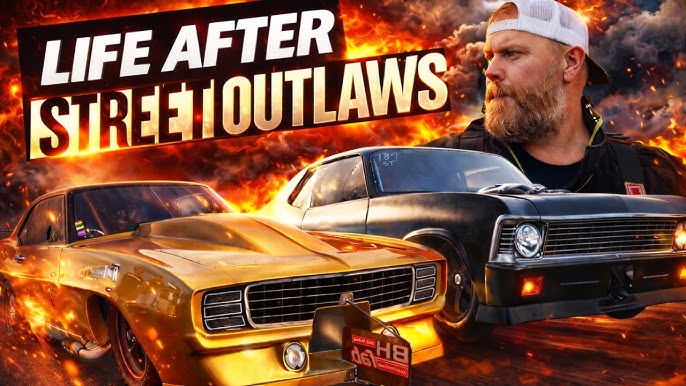
This is The Dark Truth Behind Street Outlaws: What Really Happens Off Camera!

The world of street racing has always carried a raw, dangerous edge—but few shows have brought that intensity to mainstream audiences like Street Outlaws. Known for its high-stakes races, big personalities, and adrenaline-fueled rivalries, the show built a massive following. However, behind the excitement lies a much harsher reality that many fans never get to see.
One insider recently opened up about the truth behind the scenes—and it paints a very different picture from what appears on TV.
From the outside, Street Outlaws looks like the ultimate opportunity for racers: fame, recognition, and the chance to prove themselves on a national stage. And to be fair, it delivers on that promise to some extent. The experience is thrilling, unforgettable, and filled with moments that racers will carry for the rest of their lives.
But according to those who lived it, that excitement comes at a serious cost.
Some of the most intense memories involve dangerous incidents that could have easily turned fatal. Races weren’t just competitive—they were unpredictable and often chaotic. Situations involving big personalities like JJ Da Boss added even more pressure, with environments that pushed racers beyond their limits.
One of the most shocking revelations involves close calls with death. The speaker recalls watching his best friend, Birdman (James Finney), nearly lose his life in a terrifying crash. In another incident, Dwayne Mills wrecked a $300,000 car on his very first pass—an accident that could have easily ended in tragedy.
These weren’t isolated moments. They were part of a pattern.
Behind the scenes, there’s a growing belief that production priorities leaned heavily toward creating dramatic, high-impact footage rather than ensuring racer safety. The pressure to perform, to take risks, and to deliver exciting content often put drivers in situations where the line between entertainment and danger became dangerously thin.
What makes it more complex is that racers always had a choice. No one was physically forced to stay. But the reality is far more psychological. The desire to succeed, to be seen, and to be part of something big kept many participants locked in—even when they knew the risks.
In fact, one of the most powerful comparisons made was that being on the show felt like an “abusive relationship.” Racers kept pushing forward, hoping things would improve, ignoring red flags, and convincing themselves it was worth it. It’s only after stepping away that clarity sets in—when they begin to question why they stayed in such a high-risk environment for so long.
And yet, despite all of this, there’s no complete regret.
The experience is still described as a once-in-a-lifetime opportunity. It brought exposure, unforgettable moments, and a chance to be part of something iconic in the world of street racing. But it also came with lessons—hard ones—about risk, pressure, and the true cost of chasing fame in a high-octane environment.
Final Thoughts
Street Outlaws remains one of the most influential shows in drag racing culture. But as more insiders speak out, it’s becoming clear that the reality behind the cameras is far more intense—and far more dangerous—than most viewers realize.
For fans, it’s a reminder that what looks like entertainment on screen often carries very real consequences off it.